
A nonprofit that wants to set a standard has an awkward relationship with patents. An open standard works best when anyone can use it. An idea with no protection gets fenced off by whoever moves fastest. SeaBrick's answer has been to file, to keep the filings in the project's hands, and to be plain about what they cover.
The first filing covered the block, the material and the joint
Patent counsel was engaged in January 2022. On 10 March 2022 a United States provisional application was filed under the title "Kelp-Based Modular Construction Blocks and Methods of Making Same", with SeaBrick Society as applicant. It covered the blocks, the compressed-biomass material and the way the blocks join. The founder called the draft "sixty pages of awesomeness" at the time.
A year later, on 10 March 2023, the international application was filed through the Canadian Intellectual Property Office, and it was published on 14 September 2023 as WO2023168537A1. National applications followed in Canada and the United States in September 2024.
The 2024 filings belong to the kelp years
Three provisional applications were filed in early 2024: on kelp farm structures, on methods of making seaweed composites (the Kelpstone process developed with UBC), and on a container-sized apparatus for processing biomass in remote communities. They come from the period when the project expected to build the kelp supply chain itself.
The 2025 filing describes the brick as it is now
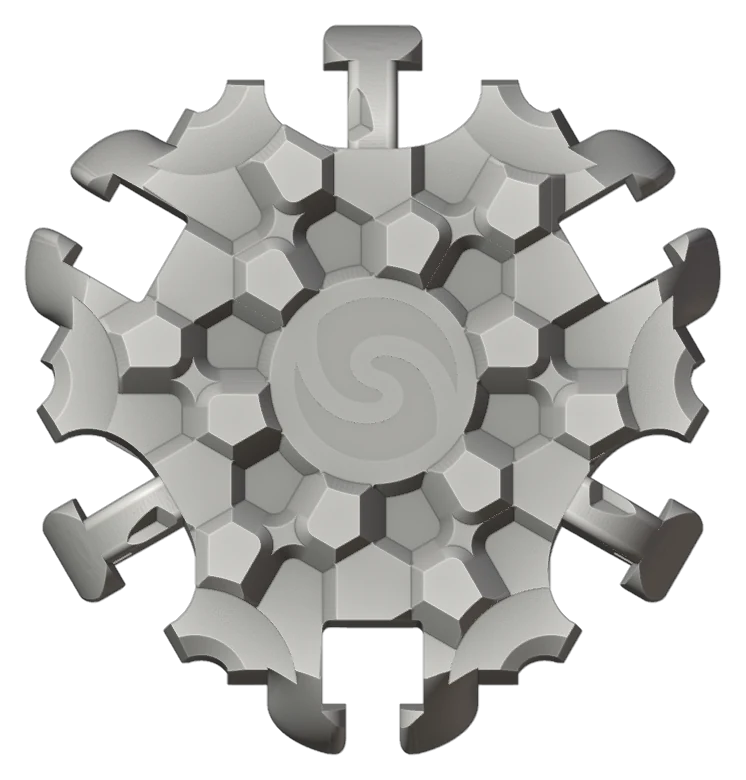
On 9 December 2025 a new provisional application, "Modular Construction Blocks and Methods of Making Same", was filed on the component brick and the current approach to moulding. At more than two hundred pages it is the fullest description of the system so far. Trademark applications for the SeaBrick name exist in Canada and the United States.
If you are thinking of building on the SeaBrick system, write to us. Making that possible is the point of the Society.